
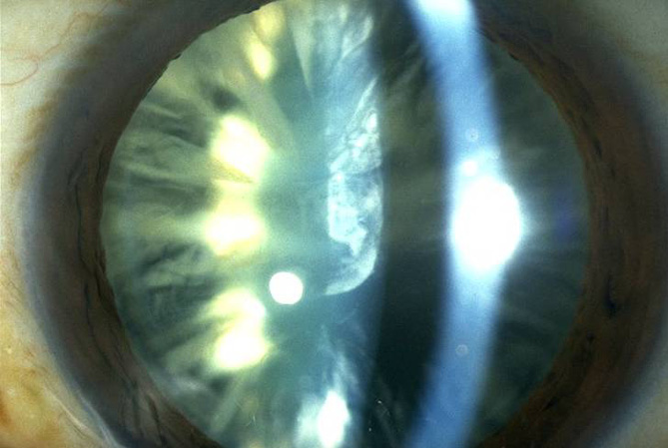
Cataract surgery is one of the most common and successful procedures performed by Ophthalmologists today. It offers significant improvement in vision for those affected by cataracts, which is a condition where the natural lens of the eye becomes cloudy. In this article, Consultant Ophthalmic Surgeon Miss Sonia Mall explains what cataracts are, the surgery process, and post-operative care can help patients feel more comfortable and prepared for their treatment.

What are cataracts?
A cataract is a clouding of the eye’s natural lens that lies behind the iris and the pupil. The lenses are used to focus vision and process fine details. This cloudiness obstructs the passage of light, leading to blurred or dim vision. Patients often notice symptoms such as difficulty reading, sensitivity to glare, faded colours, and seeing halos around lights. Cataracts typically develop gradually in both eyes (but not always at the same rate) and are most common in older adults, but they can also result from trauma, certain medications like steroids, or underlying medical conditions such as diabetes.
The primary risk factor for cataracts is age, with the majority of cases occurring in people over 60. Other risks include smoking, excessive UV exposure, and a family history of cataracts. Without treatment, cataracts can severely impact daily activities and quality of life, making surgery a necessary option.
What happens during cataract surgery?
Cataract surgery is a relatively quick and safe procedure, usually taking about 20 to 30 minutes. The surgeon removes the cloudy lens and replaces it with a clear artificial lens called an intraocular lens (IOL). This new lens restores the eye’s focusing power and improves vision.
Before surgery, the patient will be assessed to determine the appropriate type of lens and to measure the eye’s dimensions. On the day, patients typically arrive at a day surgery unit and undergo preparation including dilation of the pupil.
The procedure is usually performed under local anaesthesia, which numbs the eye while keeping the patient awake but comfortable. This is often given as eye drops or an injection around the eye. Local anaesthesia minimises risks associated with general anaesthesia and allows quicker recovery. Patients may feel slight pressure or mild discomfort during the operation, but no pain. General anaesthesia, a ‘controlled unconsciousness’, is sometimes necessary and generally reserved for patients who cannot cooperate or have special medical considerations. It is administered intravenously through a vein, or breathed in as a gas through a mask.
Unilateral vs bilateral cataract surgery
Cataract surgery can be performed on one eye at a time (unilateral) or both eyes can be operated on at the same time, but the former tends to be the standard. Both unilateral and immediate bilateral sequential surgeries are safe and effective methods of removing cataracts.
With unilateral surgery the timing of the second eye operation varies depending on the patient’s recovery and the surgeon’s recommendation. Typically, the second procedure is scheduled a few weeks to a couple of months after the first to allow the first eye to heal properly and ensure the vision outcome is optimal.
Dos and don’ts post-procedure
After surgery, patients will be advised to rest and keep the eye protected. It is important to follow the surgeon’s instructions closely to prevent infection or complications. Common advice includes:
- Do not rub or press on the eye.
- Avoid getting water, soap, or shampoo in the eye.
- Wear protective glasses or an eye shield as directed, especially while sleeping.
- Avoid strenuous activities and heavy lifting for 4 weeks.
- Attend all follow-up appointments.
- No swimming for 6 weeks.
- Avoid heavy lifting or strenuous activity for 4 weeks.
- Only drive once you have been instructed to do so by your ophthalmologist.
Many patients notice improvement in vision within a few days, but full recovery can take several weeks.
Post-operative care almost always involves the use of prescription eye drops. These usually include antibiotics to prevent infection and anti-inflammatory drops to reduce swelling. Patients must use these drops exactly as instructed, often several times a day for a few weeks.
It is important to maintain good hygiene when applying the drops, avoiding contact between the bottle tip and the eye, to reduce the risk of contamination. Patients should inform their surgeon immediately if they experience increased pain, redness, or vision changes during recovery.
Contact us or book online.
Published: 06/06/2025
Read article on Top Doctor: https://www.topdoctors.co.uk/medical-articles/what-to-expect-when-having-cataract-surgery/